What Does the Psychology of Brands and Branding Tell Us About First Impressions?
Article Summary
- The psychology of brands and branding explains how people form perceptions, trust, and emotional connections with businesses.
- Consistent branding across every customer touchpoint helps improve recognition and strengthen brand recall.
- A logo on an envelope can reinforce credibility, professionalism, and familiarity before the recipient opens the mail.
- Custom-printed envelopes support brand consistency by extending your visual identity beyond digital and marketing channels.
- Businesses that treat envelopes as part of their branding strategy can create stronger first impressions and more memorable customer experiences.
When people think about branding, they often focus on logos, websites, advertisements, and social media. While those elements certainly matter, the psychology of brands and branding extends far beyond them. Every interaction a customer has with your business contributes to how they perceive your company and whether they trust it.
That includes something many businesses overlook: the envelope.
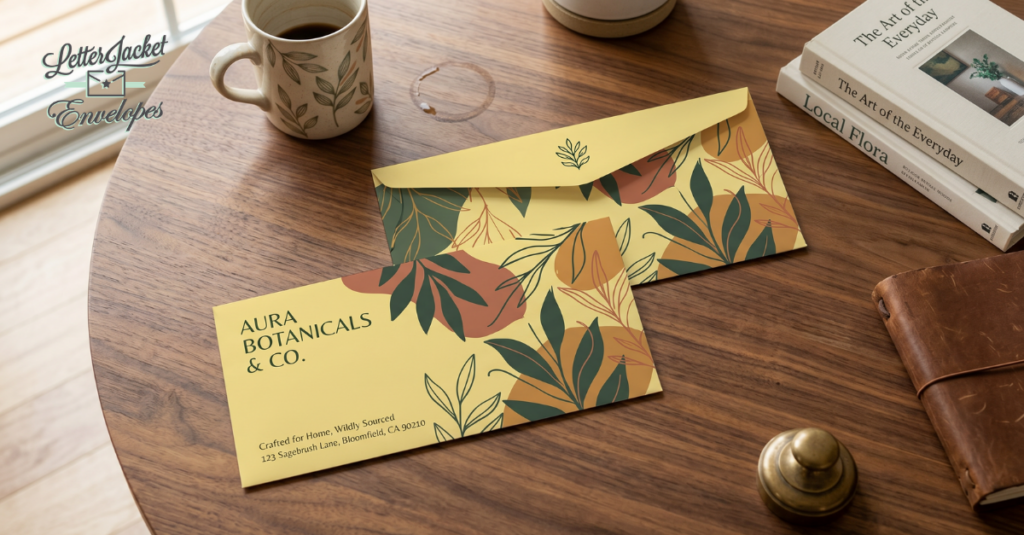
Before a customer reads a letter, opens a statement, or reviews a marketing piece, they see the envelope it arrived in. In many cases, that envelope creates the very first impression of the communication inside. A plain envelope may get the job done, but a custom-printed envelope featuring your logo, colors, and branding can reinforce recognition and credibility before the recipient even opens it.
At Letter Jacket Envelopes, we help businesses turn everyday mail into an extension of their brand with high-quality, custom-printed envelopes that support stronger customer recognition and engagement.
What Is the Psychology of Brands and Branding?
The psychology of brands and branding is the study of how visual identity, messaging, and customer experiences influence perception, trust, and purchasing decisions. Consistent branding helps people recognize and remember a business, while branded touchpoints—including custom envelopes—can reinforce credibility and strengthen brand recall.
Why Does Branding Have Such a Powerful Effect on Human Behavior?
The psychology of brands and branding is rooted in how people process information. Every day, consumers are exposed to thousands of messages competing for their attention. To make decisions quickly, the brain relies on shortcuts, often called cognitive biases, to determine what feels familiar, trustworthy, and worth noticing.
According to researchers at Harvard Business School, emotional responses play a significant role in consumer decision-making, often influencing choices before rational analysis takes place.
This is why consistent branding matters. When people repeatedly see the same logo, colors, typography, and visual style, they become more familiar with the brand. Familiarity often creates comfort, and comfort can lead to trust.
Think about some of the world’s most recognizable brands. Their logos immediately trigger associations with quality, service, reliability, or innovation. These reactions occur almost instantly because the brain has learned to associate visual cues with prior experiences.
How Does Brand Consistency Influence Customer Trust?
Consistency is one of the strongest principles in branding psychology. When customers encounter the same visual identity across multiple touchpoints, it reinforces the idea that the business is established, professional, and dependable.
According to The Branding Journal, consistent branding helps organizations build recognition, trust, and customer loyalty over time, making every branded touchpoint more valuable.
Businesses often focus on maintaining consistency across websites, social media platforms, and advertising campaigns. However, physical mail is frequently forgotten despite being a direct touchpoint with customers.
Whether you’re sending invoices, marketing materials, donation requests, statements, or customer correspondence, your mail should look like it came from your brand—not from a generic office supply store.
For example, businesses that use custom-printed envelopes can create a more professional and recognizable experience that aligns with the rest of their marketing efforts.
How Does a Logo on an Envelope Support Branding Psychology?
A logo serves as a mental shortcut. It helps customers quickly identify who is communicating with them and what they can expect from the interaction.
When your logo appears on an envelope, several psychological effects can occur:
Increased Recognition
People are more likely to notice something they recognize. A familiar logo can help your mail stand out among bills, advertisements, and other correspondence.
Greater Credibility
Professional branding signals legitimacy. A custom envelope often appears more trustworthy than an unmarked envelope, especially when the recipient is deciding whether to open it.
Reinforced Brand Recall
Every exposure to your logo strengthens memory associations. Even if someone only glances at your envelope, they are receiving another brand impression that can contribute to future recognition.
Improved Consistency
Customers expect a seamless experience. When your envelope matches your website, marketing materials, and other communications, it reinforces the perception of an organized and reliable business.
In other words, the envelope is not just packaging. It is another opportunity to strengthen the relationship between your brand and your audience.
Could Your Envelope Be Working Harder for Your Brand?
Many organizations invest heavily in digital marketing while overlooking the impact of physical mail. Yet direct mail remains an important communication channel for businesses, nonprofits, churches, financial institutions, and healthcare organizations.
A branded envelope can:
- Increase recognition before opening
- Reinforce professionalism
- Support customer trust
- Strengthen brand consistency
- Help communications stand out in a crowded mailbox
For businesses that regularly send mail, these small branding opportunities can add up over time.
Whether you’re mailing invoices, statements, promotional materials, or customer communications, the envelope plays a larger role in brand perception than many people realize.
You can explore additional options in Letter Jacket’s selection of business envelopes, designed to help organizations create a polished, professional impression.
Key Takeaways
- The psychology of brands and branding shows that people often make judgments based on familiarity, consistency, and emotional associations.
- Consistent branding across every customer touchpoint helps build trust and improve brand recognition.
- Logos act as visual shortcuts that help customers quickly identify and remember your business.
- A custom-printed envelope can reinforce credibility and professionalism before the recipient even opens the mail.
- Every mailing is an opportunity to strengthen brand recall and create a more cohesive customer experience.
- Small branding details, including envelopes, can contribute to stronger customer relationships over time.
- Custom envelopes help ensure your physical mail aligns with the same brand standards as your website, marketing materials, and social media presence.
- Businesses that view envelopes as part of their branding strategy can create more memorable and impactful customer interactions.
What Can Businesses Learn From the Psychology of Brands and Branding?
The psychology of brands and branding shows that customer perceptions are shaped by every interaction, not just the big ones. Small details can reinforce trust, recognition, and familiarity, influencing future decisions.
A logo on an envelope may seem like a minor design choice, but it supports many of the same psychological principles that make successful brands memorable. When your branding appears consistently across every customer touchpoint, including your mail, it helps strengthen the connection between your business and your audience.
Ready to make your mail work harder for your brand? Talk with the team at Letter Jacket Envelopes about custom envelope solutions designed to help you get noticed, build trust, and stay top of mind.