What Is a Security Envelope and When Should You Use One?
Article Summary
- A security envelope has a printed tint pattern on the inside that stops anyone from reading its contents through the paper.
- You should use a security envelope whenever you mail personal, financial, medical, or legal information.
- Banks, insurers, healthcare providers, billing departments, and law firms use security envelopes as a standard privacy practice.
- Security envelopes can be custom-printed, so you can protect privacy while building brand recognition.
A security envelope looks like any other business envelope from the outside. The difference is a printed pattern on the inside that keeps your documents private. For organizations that mail sensitive information, that small detail protects customers and builds trust.
Below, we’ll cover how security envelopes work and which mail should always go in one. If you already know what you need, you can shop our security envelopes anytime.
When should you use a security envelope?
Use a security envelope any time you mail documents containing personal or confidential information, such as account numbers, payment details, medical records, tax forms, or legal correspondence. The security tint inside the envelope prevents the contents from being read through the paper while in transit.
What Is a Security Envelope?
A security envelope is a mailing envelope with a security tint printed across its interior. The tint is a dense pattern of lines, shapes, or crosshatching, often in blue, gray, or black. It hides whatever is inside, even when the envelope is held up to a bright light.
Security envelopes come in the same sizes and styles as standard business envelopes, including #10 and 6 3/4, with or without windows. On window envelopes, the tint covers everything except the window, so the address shows while the rest of the document stays private.
From the outside, a security envelope looks clean and professional. Only the inside is different, so you get added privacy without changing how your mail looks or how your team prepares it.
Why Can You Read Through a Regular Envelope?
Most envelope paper is thin enough to let light pass through it. When light shines behind a standard envelope, dark ink on the letter inside shows through; account numbers, balances, and names can become readable in seconds.
A security tint solves this problem by:
- Absorbing and scattering light before it reaches the contents.
- Mixing with the shapes of printed text, so words and numbers blur together.
- Working without any extra steps from your mailroom.
The result is an envelope that keeps sensitive details private from the time it’s sealed until the recipient opens it.
Which Documents Should Always Go in a Security Envelope?
Ask one question: would it cause harm if a stranger read this? If the answer is yes, use a security envelope. Common examples include:
| Document type | Sensitive Information |
| Bank and credit union statements | Account numbers and balances |
| Checks and remittances | Payment and routing details |
| Insurance policies and claims | Personal and financial data |
| Medical records and patient bills | Protected health information |
| Tax forms and financial reports | Income and identification numbers |
| Legal contracts and case letters | Confidential client matters |
| Payroll and HR documents | Salaries and employee records |
Which Industries Rely on Security Envelopes?
Banking and financial institutions mail statements, checks, and notices that carry the most sensitive data to many customers.
Insurance agencies send policies and claim paperwork full of personal details.
Healthcare providers handle patient information in accordance with the privacy expectations set by the HIPAA Privacy Rule.
Billing, accounting, and tax offices send invoices, remittance forms, and tax documents, with volume that peaks each tax season.
Legal and professional services firms mail contracts, settlements, and case correspondence that clients expect to stay private.
For any organization, the Federal Trade Commission recommends protecting personal information in paper records as carefully as digital ones.
Does a Security Envelope Have to Look Plain?
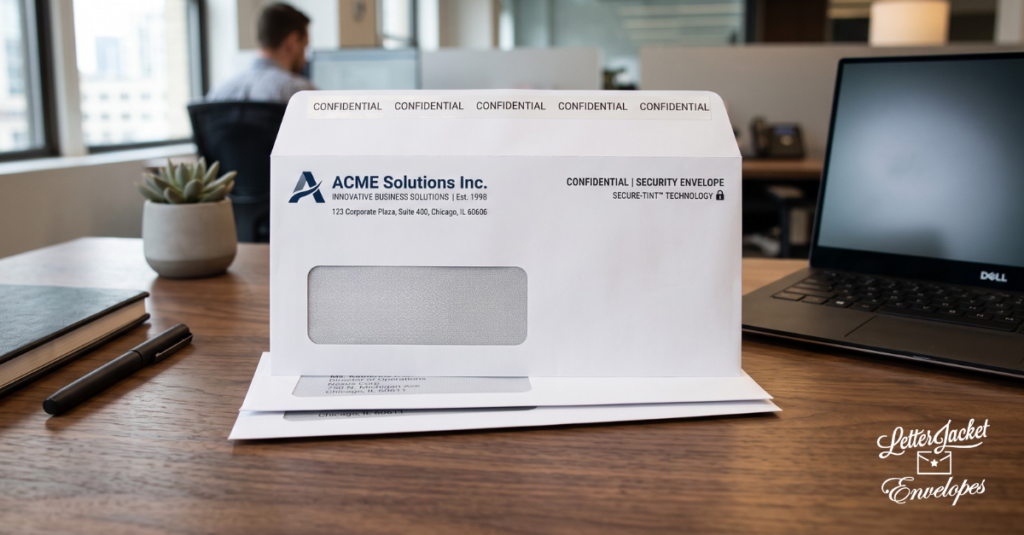
Not at all. Because the tint is printed on the inside, the outside is free for your logo, return address, and brand colors. You can match your security envelopes to the rest of your stationery, so every statement, invoice, or policy document looks consistent with your brand.
That consistency matters more than it might seem. People are more likely to open mail when they recognize the sender, and a branded envelope helps your statements and notices stand out from junk mail.
A custom-printed security envelope tells recipients the mail is from a business they know and trust, and that you take their privacy seriously. That first impression happens before they even open it.
What Should You Consider When Ordering?
The right security envelope depends on what you mail, how much of it you send, and how your team prepares it. Before you order, think through these five choices:
- Size: A #10 envelope fits standard 8.5 x 11 letters folded in thirds, making it the go-to for statements, notices, and correspondence. A 6 3/4 envelope is smaller and works well for checks, remittance slips, and return envelopes.
- Windows: Single-window envelopes show the recipient’s address, so you don’t need to print or label each one. Double-window envelopes show both the recipient and return address, which is common for invoices and billing statements.
- Closure: Regular gum envelopes work well with mailing and sealing machines, making them a good fit for high-volume mailers. Peel-and-seal envelopes are faster and cleaner for offices that stuff and seal by hand.
- Tint color: Blue is a common choice for billing and remittance mail because it hides black ink well. See our blue security tint envelopes for an example.
- Printing: Plain security envelopes are practical for everyday internal or general use. Custom-printed envelopes add your logo and return address, reinforcing your brand on every piece of mail.
If you’re unsure which combination fits your mail, our team can walk you through the options and recommend the right envelope for the job.
Key Takeaways
- A security envelope uses an interior tint to keep its contents from being read through the paper.
- Use a security envelope for any mail containing financial, medical, legal, or personal information.
- Banking, insurance, healthcare, billing, and legal organizations depend on security-tinted envelopes.
- Custom printing lets a security envelope protect privacy and strengthen your brand.
- Size, window style, closure, tint color, and printing are the main choices when ordering.
Ready to Make Sure Your Confidential Mail Stays Confidential?
The right envelope protects both your customers and your reputation. Letter Jacket Envelopes makes plain and custom-printed security envelopes in the USA for financial institutions, insurers, healthcare offices, and businesses of all sizes.
When you order, you work directly with real people who help you choose the right size, tint, and print for your mail. Contact Letter Jacket Envelopes today to start your order.