What Is the History of Postage Stamps?
Summary: What Is the History of Postage Stamps?
- The invention of postage stamps made mailing more affordable, organized, and accessible by allowing senders to prepay postage.
- Before stamps existed, postal rates varied widely, and recipients were often responsible for paying delivery costs.
- The world’s first adhesive postage stamp, the Penny Black, was introduced in England in 1840 and transformed global postal systems.
- The United States issued its first official postage stamps in 1847, featuring Benjamin Franklin and George Washington.
- Modern mailing practices, including business mail, direct mail campaigns, and widespread envelope use, all evolved alongside the development of postage stamps and standardized postal services.
Postage stamps completely changed the way people send mail by making postal systems more affordable, organized, and accessible. Before stamps existed, mailing a letter was often confusing, expensive, and sometimes paid for by the recipient. From the first “Penny Black” stamp in England to modern Forever stamps in the United States, postage stamps have played a major role in the history of communication and direct mail.
Most people probably don’t spend much time thinking about postage stamps anymore. They just buy a book of Forever stamps, toss it in a kitchen drawer, and forget about it until they need to mail something. But for a long time, stamps completely changed how people communicated and sent mail across the world.
Mailing a letter used to be a lot less straightforward than it is today. There wasn’t a standard pricing system, postage costs could change depending on distance, and in many cases the person receiving the letter had to pay for it. Some people even figured out ways to pass messages through markings on the outside of envelopes so the letter never had to be officially accepted or paid for.
Once postage stamps became more common, mailing letters became much easier and more consistent. People could prepay for mail instead of leaving the cost up to the person receiving it, and postal systems finally had a more organized way to handle deliveries. Over time, that shift also helped increase the use of envelopes, business mail, and direct mail systems that companies still rely on today, especially as American-made envelopes became more widely available.
When did the United States issue its first postage stamp?
U.S. postage stamps first became available in the late 1840s. In 1847, the federal government released two stamp designs for public use — one with Benjamin Franklin and another with George Washington. Before then, mailing systems were far less standardized, and some local mail services created their own versions for deliveries within certain cities.
What Was Mail Like Before Postage Stamps?
Long before people could buy a sheet of Forever stamps at the grocery store, mail worked very differently. Letters were often hand-marked, and postal workers would write postage amounts or routing notes directly on the paper. There wasn’t much consistency from one area to another, which made mailing slower and a lot more confusing than it is now.
At the time, most letters were simply folded pieces of paper rather than sealed envelopes. Mailing costs could vary quite a bit depending on how far the letter needed to travel and how many pages were inside. In many cases, the person receiving the letter was the one expected to pay for the delivery, which probably made checking the mail a little more stressful than it is today.
People found ways to work around the system whenever they could. Some senders used small markings or symbols on the outside of letters to communicate basic messages without the recipient needing to officially accept — and pay for — the mail. Apparently, finding ways around extra fees is not exactly a modern invention.
Mail systems started becoming a little more organized in the 1600s when England introduced some of the first official postal markings. A postal official named Henry Bishop helped create date stamps that showed when mail had been received by the post office. It was a simple idea, but it made it easier to keep letters from sitting around too long waiting to be delivered.
Who Invented the First Adhesive Postage Stamp?
The modern postage stamp is largely credited to Sir Rowland Hill, an English schoolteacher who proposed a simpler prepaid postage system in 1837.
Postal rates changed quite a bit as the mail system became more efficient. In the 1860s, sending a letter cost three cents per half-ounce. A couple of decades later, the price dropped to two cents, and eventually that same rate covered a full ounce instead. For people sending regular mail, that was a significant improvement.
Those ideas eventually led to the creation of the famous “Penny Black,” the world’s first adhesive postage stamp issued by the British government on May 6, 1840.
The system was revolutionary because it made mailing easier, faster, and far more accessible. It also dramatically increased mail usage. Turns out people send a lot more letters when the process isn’t wildly confusing.
According to the Smithsonian National Postal Museum, Rowland Hill’s postal reforms helped shape modern postal systems worldwide.
How Did Postage Stamps Change Mailing?
Once prepaid postage became standard, mail volume increased quickly. Businesses, families, and government offices could communicate more efficiently without worrying about complicated rate calculations or delivery disputes.
When sending mail became easier, people really leaned into it. Businesses started mailing customers more often, families wrote letters to relatives in other cities, and paper mail slowly became part of everyday life instead of something reserved for important occasions only.
As mailing systems expanded, demand for envelopes grew. In fact, Rowland Hill’s brother, Edwin Hill, later helped invent envelope-folding machinery to keep up with demand. Apparently, even the 1800s had shipping and supply chain problems.
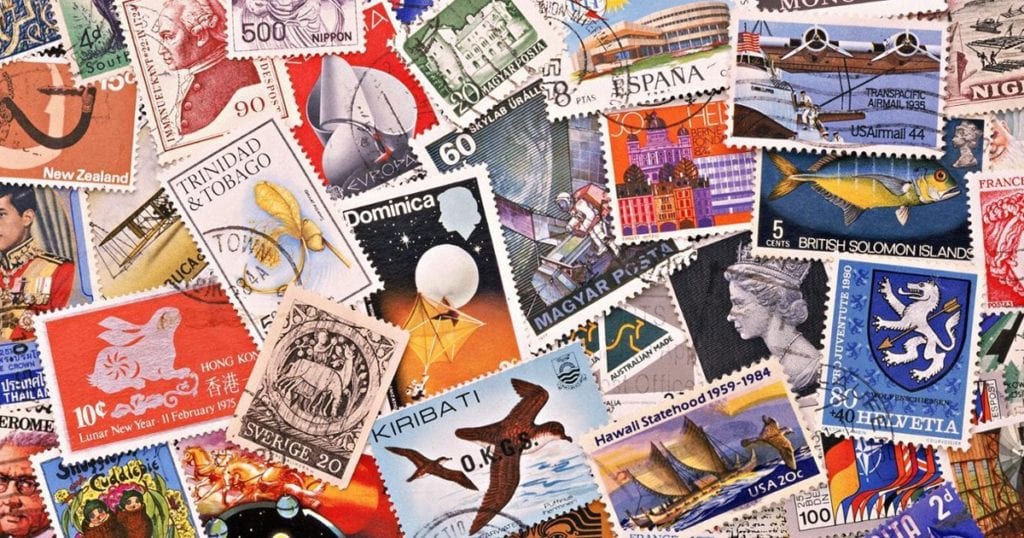
Over time, postage stamps evolved into collectible items featuring historical figures, national landmarks, holidays, sports, and pop culture icons.
How Have U.S. Postage Rates Changed Over Time?
Postage rates in the United States have changed significantly over the years.
Postal prices changed a lot over the years as the system became more efficient. In the 1800s, even small changes in postage rates mattered because people depended heavily on mail for communication and business. The United States also introduced perforated stamps during that time, which made stamps much easier to separate without needing scissors sitting next to your mail pile.
Today, Forever stamps simplify mailing by allowing customers to use the same stamp regardless of future postal rate increases. Which is probably the closest thing the postal world has to beating inflation.
Even with digital communication everywhere, physical mail still plays an important role in business operations, fundraising, billing, and marketing campaigns. The United States Postal Service continues to process and deliver mail to millions of addresses across the country each year.
Why Do Postage Stamps Still Matter Today?
Even though people send fewer handwritten letters today, postage stamps still play an important role in direct mail and business communication.
Even now, plenty of organizations still depend on physical mail for everyday communication. Businesses send billing statements and customer notices, nonprofits mail donation requests, and invitations, legal paperwork, and marketing materials still regularly show up in mailboxes.
Churches and nonprofit groups still rely heavily on custom offering envelopes for fundraising and weekly giving campaigns.
And while most people aren’t collecting stamps like they did decades ago, physical mail continues to evolve alongside newer trends in envelope materials and mailing solutions.
Key Takeaways
- Postage stamps helped standardize and simplify mailing systems.
- The first official U.S. postage stamps were issued in 1847.
- Sir Rowland Hill introduced prepaid postage and weight-based pricing.
- Postage reform helped increase the use of envelopes and direct mail.
- Modern Forever stamps continue to simplify mailing today.
Explore Envelope Solutions Built for Modern Mailing
Postage stamps may have changed over the years, but reliable mailing materials still matter. Letter Jacket Envelopes provides customizable envelope solutions for businesses, nonprofits, schools, churches, and organizations that rely on professional direct mail. From custom printing and branding to multiple sizes, styles, and security options, our team helps create envelope solutions built for modern mailing needs. Contact Letter Jacket Envelopes to explore custom envelope options for your business or organization.